- Gala Night
- Corporate Events
- Year-End Party
How to Plan a Company Gala Night: Venue, Stage and Running Order
A gala for a year-end party, awards ceremony or company anniversary: choosing the venue, the seating plan, stage and sound, the running order and the budget.
- Author
- Seda Mice
- Published
- Reading time
- 3 min read
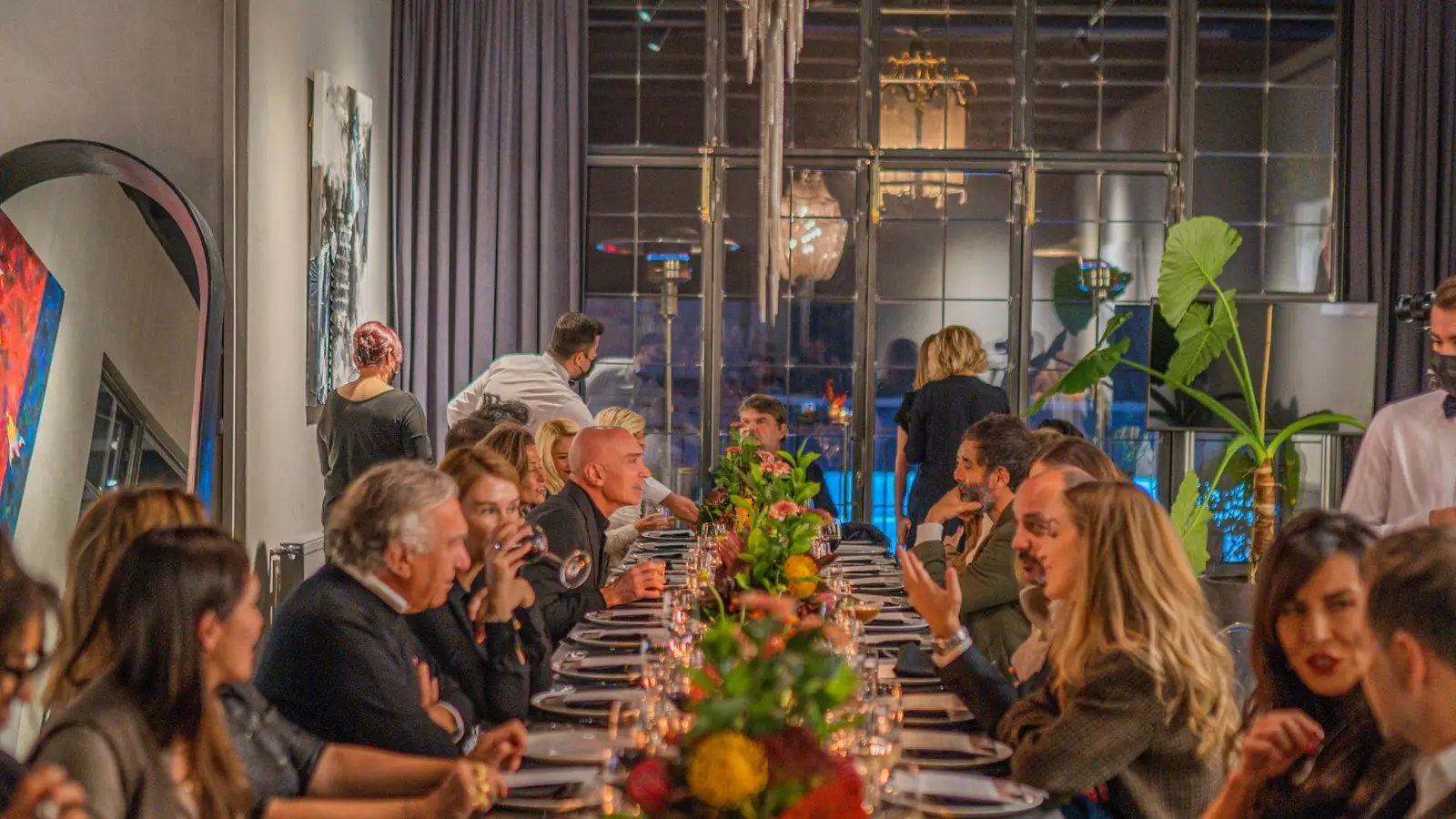
A gala is the evening a company celebrates a year, or a milestone, with its people and partners. Guests remember it less for the food than for how the evening flowed: whether they queued at the door, whether the speeches dragged, when the music started. A good gala feels to the guest as if it runs by itself. Behind that sits a plan written minute by minute.
Start with the purpose
A year-end party and an awards ceremony can share a venue, but they are not the same evening. A party is about music and conversation, an awards night about the stage and the speeches. At a company anniversary, a short film or presentation looking back usually becomes the centre of the night. Settle the purpose first, because it decides how the venue and the programme are chosen.
Choosing the venue
We look at four things in a gala venue:
- Capacity and layout: at round tables you need about 1.5 square metres per guest, not counting the stage, dance floor and service aisles.
- Ceiling height: at least four metres, ideally five, for stage lighting and a screen.
- Access: most guests arrive in evening traffic. A hotel ballroom removes that problem.
- Noise limits: some venues turn the music down after a set hour. That limit should be written into the contract.
The seating plan
Seating is the most sensitive part of a gala. The management table sits close to the stage without blocking it. Award winners sit where they can reach the stage easily. Business partners who do not know each other are not left at a table on their own, and each table has a host from the company.
Once the plan is final, table numbers go on a board at the entrance or on name cards. A guest who cannot find their seat starts the evening on the wrong foot.
Stage, sound and screen
Speeches should be heard clearly from the back row, so sound needs to cover the room evenly. Films and slides are tested at the venue the day before. Run a short rehearsal for the host, the speakers and the managers presenting awards. Who comes up from where, who holds the award, when the walk-up music starts: all of it is settled in rehearsal.
Running order
For a three-hour gala we use roughly this order:
- Welcome drinks, 45 minutes. Guests arrive, photos are taken, tables are found.
- Opening speech, ten minutes at most.
- First course.
- Awards or film, 20 to 30 minutes, with service paused.
- Main course and dessert.
- Music and dancing.
Once speeches add up to more than half an hour, the room's attention drifts. Give each speaker a time and remind them of it politely.
Budget
Food and drink are the largest part of a gala budget, followed by venue hire, sound and lighting, stage design, performers or a band, photo and video, invitations and awards. Because prices are per head, the date by which numbers are final should be in the venue contract. Every guest lost in the last week is often still on the invoice.
Send us the date, the number of guests and the purpose of the evening, and we will prepare venue options and a draft running order. What we take on is on our Corporate Event Organisation page.